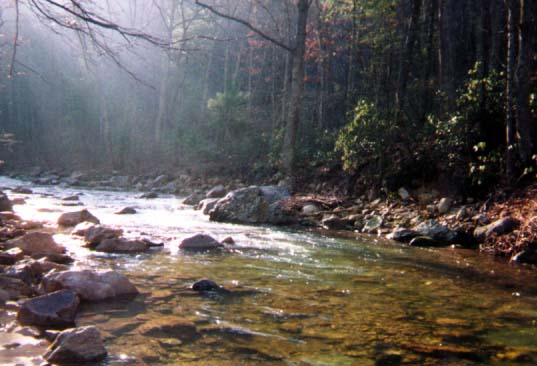
Along the eastern edge of North America, stretching from the State of Georgia
and Alabama in the US to Quebec in Canada lies the Appalacian Mountains,
an ancient and worn range. A small portion of this range, from Tennessee
to Northern Virginia seperates the bulk of the Alleganey Range from the
Atlantic coastal plain-this sharp line of wooded peaks is known as the
Blue Ridge. The Blue Ridge is positioned to catch moisture from the
Atlantic, and to scrape rain and snow from weather systems from the mid-west,
making it moist and lush. These mountains have been logged out twice-once
in the late 1700's and again in the late 1800's, but due to conservation
efforts some parts of these forests have regrown their coat of trees, and
can support the fragile, native, brook trout. While the brook trout
is the only native trout to these mountains, it has been joined since the
1880's by the brown and rainbow trout in the slower,
wider sections of the larger rivers and creeks. 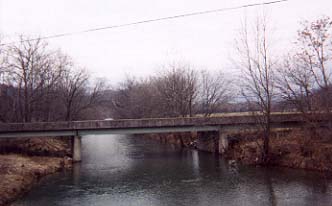 In the largest
streams and rivers, too slow and warm for the trout, black basses and
sunfish abound-especially Smallmouth Bass, Rock bass, and Redbreast Sunfish.
Habitats
vary
from extremely small streams, in which a pool that is 5'(1.9m) accross
In the largest
streams and rivers, too slow and warm for the trout, black basses and
sunfish abound-especially Smallmouth Bass, Rock bass, and Redbreast Sunfish.
Habitats
vary
from extremely small streams, in which a pool that is 5'(1.9m) accross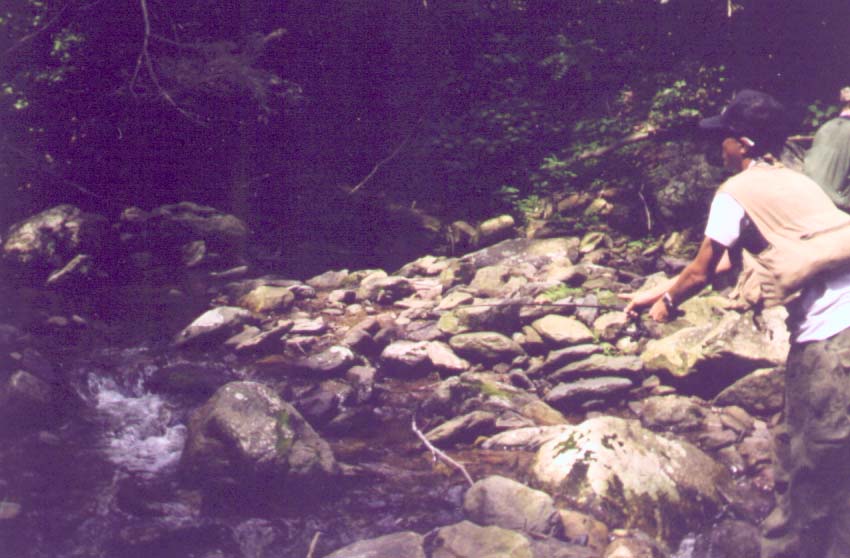 and 6"(14cm) deep is large,
to slower rivers with 20' deep pools and are 100 feet across.
and 6"(14cm) deep is large,
to slower rivers with 20' deep pools and are 100 feet across.
In the Shenandoah National Park,
most streams near Skyline Drive (the top of the Blue Ridge Parkway, follows
the spine of the Blue Ridge Mtns) are definitely small. We drove
up to a couple of the parking areas at the start of some of the trails
(Doyle Trail is a good one), and had to accomplish a two mile hike DOWNHILL
before we the stream was large enough to support brook trout! The stream
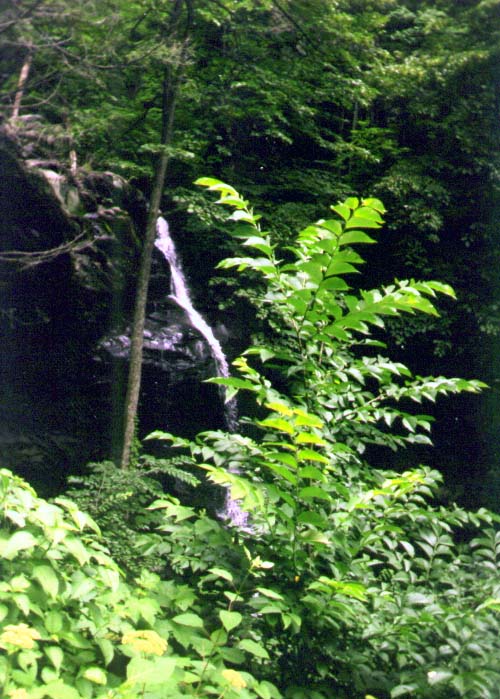
(a tributary of the Doyle River) was heavily shaded by the forest canopy
(a must for a stream to support brook trout) and in most places could be
crossed by one long step. In these streams the brook trout are very
wary and will dive under a rock at the slightest provocation. The
brook trout 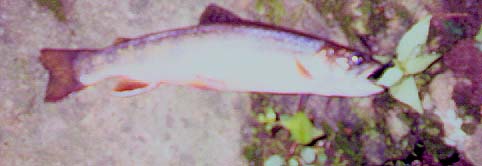 here are
also small due to the small water and limited availability of food, and
range from 2" to 9" in size (anything over 10" is big, and one over 12"
is a trophy-but they all must be released here). We dressed head
to toe in green camoflage, and slowly tip-toed to trees that were near
each promising looking pool (one or two big rocks or a downed tree, or
an overhang, 4" deep or better, 2' accross or better), and lobbed our barbless
offerings to the brook trout, who when not spooked savagely attacked any
lure that was 2" or less and white, black, or chartruese. Due to the single
barbless hook restrictions we opted for 1-16oz
marabou crappie jigs, beadhead wollyworms, size 0 spinners . All we had to do was put the lure within
2 feet of an object that the brookies might hide under, and twitch it slowly
a few times, which would inspire any nearby brookie to dart out from it's
hiding place, grab the lure, and either shake it loose (60% of the time)
or dart around the pool frantically. The entire dart out-bite-shake
loose bit takes about 2 seconds, making for an alert and somewhat confused
angler!
here are
also small due to the small water and limited availability of food, and
range from 2" to 9" in size (anything over 10" is big, and one over 12"
is a trophy-but they all must be released here). We dressed head
to toe in green camoflage, and slowly tip-toed to trees that were near
each promising looking pool (one or two big rocks or a downed tree, or
an overhang, 4" deep or better, 2' accross or better), and lobbed our barbless
offerings to the brook trout, who when not spooked savagely attacked any
lure that was 2" or less and white, black, or chartruese. Due to the single
barbless hook restrictions we opted for 1-16oz
marabou crappie jigs, beadhead wollyworms, size 0 spinners . All we had to do was put the lure within
2 feet of an object that the brookies might hide under, and twitch it slowly
a few times, which would inspire any nearby brookie to dart out from it's
hiding place, grab the lure, and either shake it loose (60% of the time)
or dart around the pool frantically. The entire dart out-bite-shake
loose bit takes about 2 seconds, making for an alert and somewhat confused
angler!
For those anglers not up to an arduous, 4 mile round-trip, hike,
a trip to the lower reaches of the Doyle river, or the higher reaches of
the Murray, South, Shannandoah, Pedlar, and Buffalo rivers offer a different
type of angling. In the summer, these rivers host large numbers of
small to mid-sized smallmouth and rock bass, and in the fall, winter, and
spring offer brown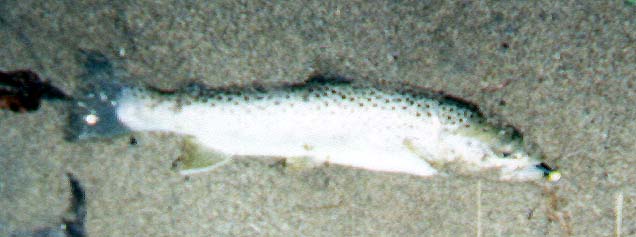 ,
rainbow
,
rainbow 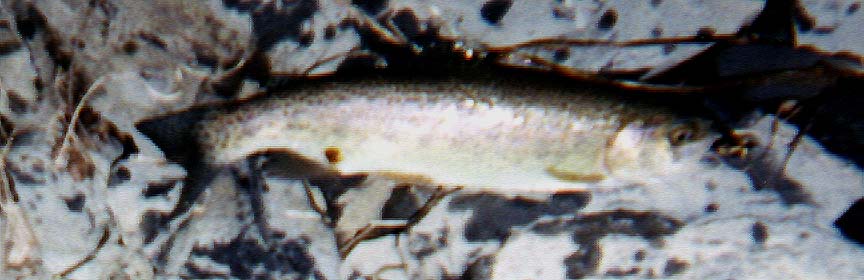 (stocked once
or twice a month in these seasons! see Virginia Dept. of Fish and Game
for
the latest stockings), and brook trout. In either case, these rivers are
easily accessible by car or canoe, and can be fished by a variety of means
(unlike the brook trout creeks above which are too tight for any rod longer
that 5'6" making fly fishing interesting, though a short 3wgt is doable). These waters are the
bread-and-butter fisheries of the area, and are usualy packed elbow to
elbow the first weekend after each stocking, but are near deserted at other
times. In the spring, summer, and fall, a small crankbait,
1/16oz jig, and on the fly 2 inch weighted streamers, wolly worms, or poppers will result in constant hookups with a variety of sunfish and black basses
(stocked once
or twice a month in these seasons! see Virginia Dept. of Fish and Game
for
the latest stockings), and brook trout. In either case, these rivers are
easily accessible by car or canoe, and can be fished by a variety of means
(unlike the brook trout creeks above which are too tight for any rod longer
that 5'6" making fly fishing interesting, though a short 3wgt is doable). These waters are the
bread-and-butter fisheries of the area, and are usualy packed elbow to
elbow the first weekend after each stocking, but are near deserted at other
times. In the spring, summer, and fall, a small crankbait,
1/16oz jig, and on the fly 2 inch weighted streamers, wolly worms, or poppers will result in constant hookups with a variety of sunfish and black basses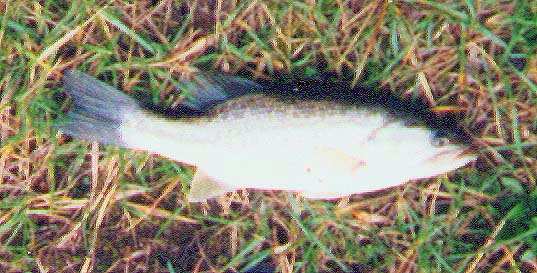
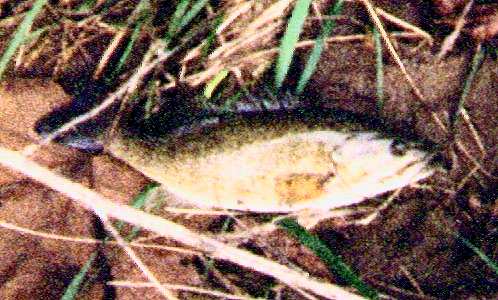 .
Fish the heads of pools, overhangs, and rock snags during morning and evening,
and fish slow, shaded, backwaters during the day. I use either 2lb spinning
gear with the small lures or an 8 weight flyrod with 4# or 2# tippet for
the flies. The evenings of the late spring and early fall offer incredible
surface action from sunset to 2 hrs after sunset, and a tiny poppr or chartruese
cork bass popper will result in explosive strikes (though the fish aren't
always big, they are very very aggressive at night). In the winter,
the trout can be picked off with numerous lures, but my favorites are 1"-1.5"
crayfish imitations in chartruese, slowly twitched off the bottom in the
slower sections of the current. For spin fishers, a size0 silver
panther martin or 1/32oz crappie jig (with a rubber crayfish or marabou)
wil suffice. In all cases, 2# line or tippet is a must since the 'dumb'
trout were taken out long ago by the powerbait wielding locals, leaving
cautious and savvey trout. A slow twitching motion in the current will
result in srikes, but be prepared to put in time to locate the fish.
.
Fish the heads of pools, overhangs, and rock snags during morning and evening,
and fish slow, shaded, backwaters during the day. I use either 2lb spinning
gear with the small lures or an 8 weight flyrod with 4# or 2# tippet for
the flies. The evenings of the late spring and early fall offer incredible
surface action from sunset to 2 hrs after sunset, and a tiny poppr or chartruese
cork bass popper will result in explosive strikes (though the fish aren't
always big, they are very very aggressive at night). In the winter,
the trout can be picked off with numerous lures, but my favorites are 1"-1.5"
crayfish imitations in chartruese, slowly twitched off the bottom in the
slower sections of the current. For spin fishers, a size0 silver
panther martin or 1/32oz crappie jig (with a rubber crayfish or marabou)
wil suffice. In all cases, 2# line or tippet is a must since the 'dumb'
trout were taken out long ago by the powerbait wielding locals, leaving
cautious and savvey trout. A slow twitching motion in the current will
result in srikes, but be prepared to put in time to locate the fish.
Once the rivers slow, in the Maurry, Shenandoah, or James River, Channel Catfish, Carp, Largemouth bass, Crappie, Redbreast Sunfish, and Rock bass are prime targets below rocks, brush piles, and weedbeds.
 |
|
| Get your Combat-Fishing Stuff Here! |
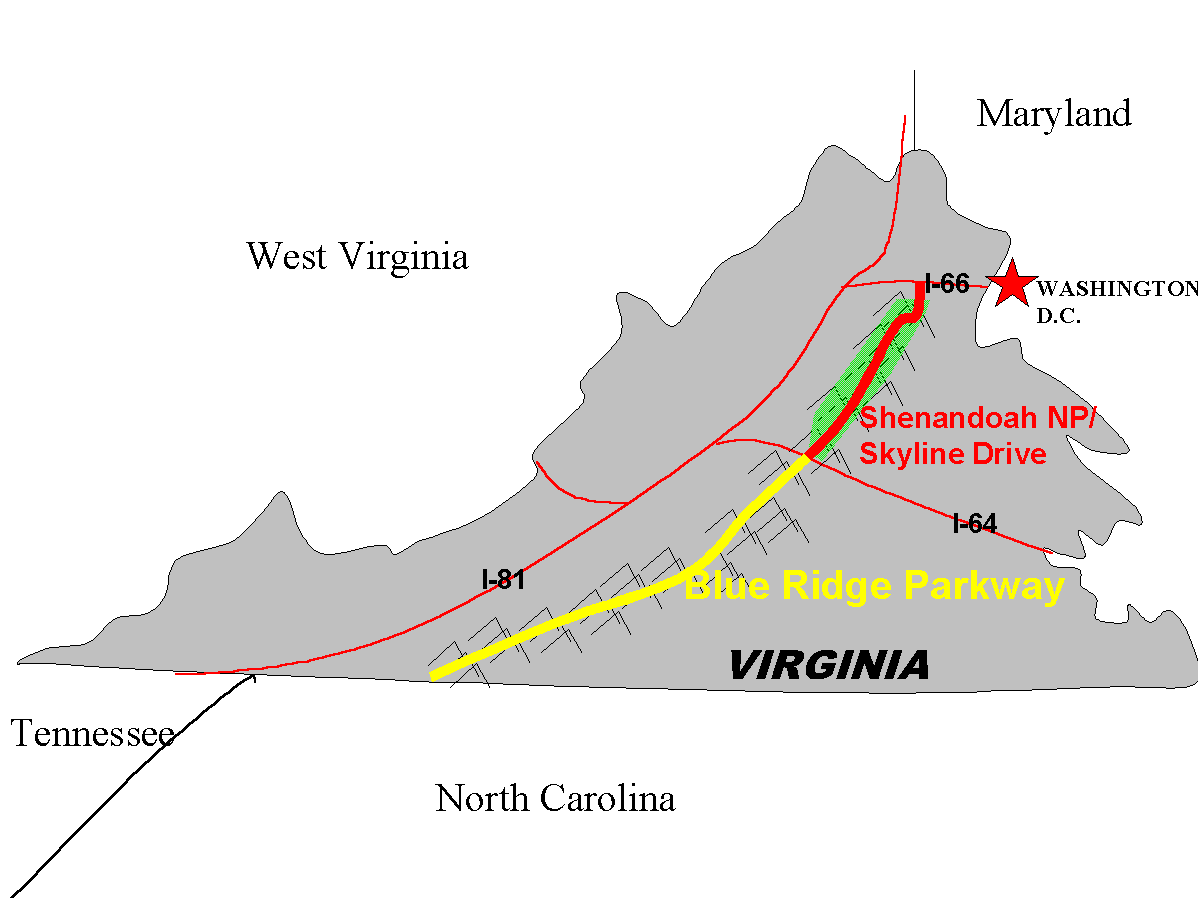 ---
Here is a more detailed map
from I-81 from Roanoke, Virginia to Strasburg, Virginia follow
just west of the Blue Ridge mountains, but following the Blue Rige Parkway
(access at Roanoke, Buena Vista, From I-64 East near Staunton, or Harrisonburg
) which becomes Skyline Drive will put you directly on the Blue Ridge-and
is an excellent drive or bike ride.
---
Here is a more detailed map
from I-81 from Roanoke, Virginia to Strasburg, Virginia follow
just west of the Blue Ridge mountains, but following the Blue Rige Parkway
(access at Roanoke, Buena Vista, From I-64 East near Staunton, or Harrisonburg
) which becomes Skyline Drive will put you directly on the Blue Ridge-and
is an excellent drive or bike ride.
 Brook Trout |
 Brown Trout |
 Rainbow Trout |
 Northern Rock Bass |
 Smallmouth Bass |
 Largemouth bass |
 Green Sunfish |
 Common Carp |
 Crappie |
 Redbreast Sunfish |
Common Shiner/Fallfish |
Latest Reports | Fishing Articles | Fishing Tactics | Fish Ecology and Biology | Travel Articles | Fishy Fun | External Links | Shopping | HOME
|
|
| Get your Combat-Fishing Stuff Here! |
ALL content ©1993-2016 Bryce L. Meyer. The term "Combat-Fishing" is a federally registered trademark. "Combat Fishing" when used in reference to travel information, fishing websites, fishing or travel books, or similar products as a brand is also a trademark. Fish and Pole logo is also a trademark.